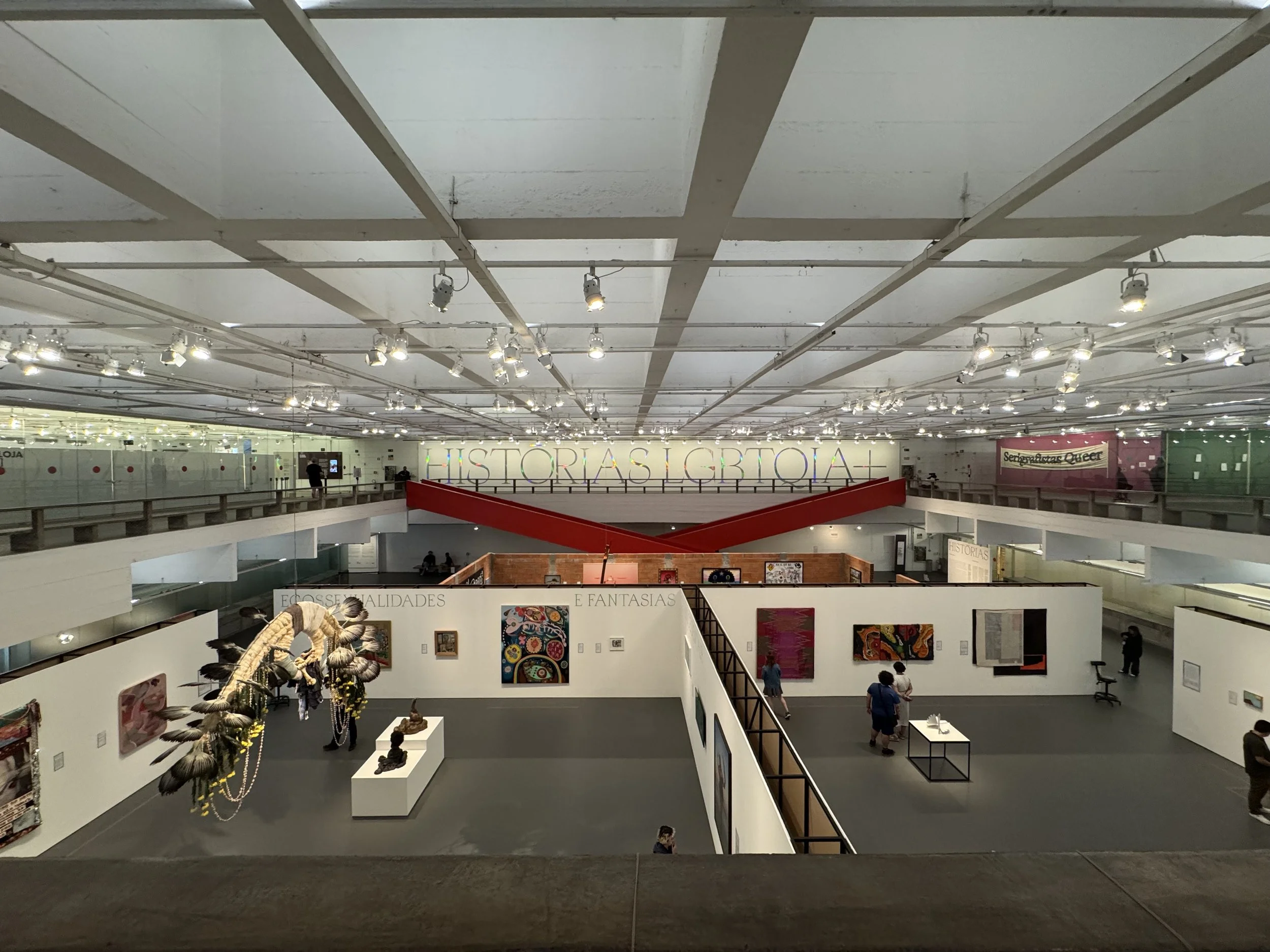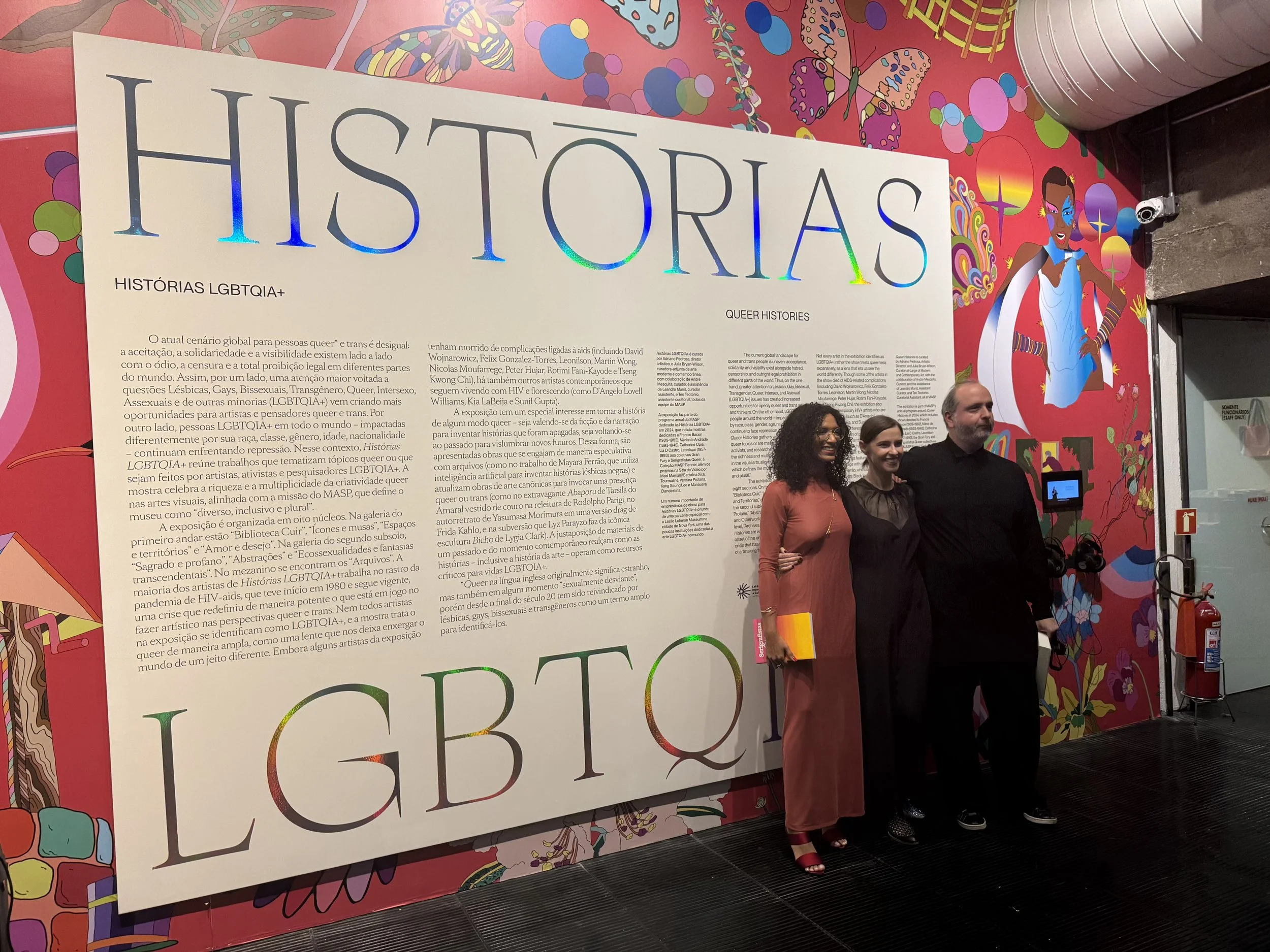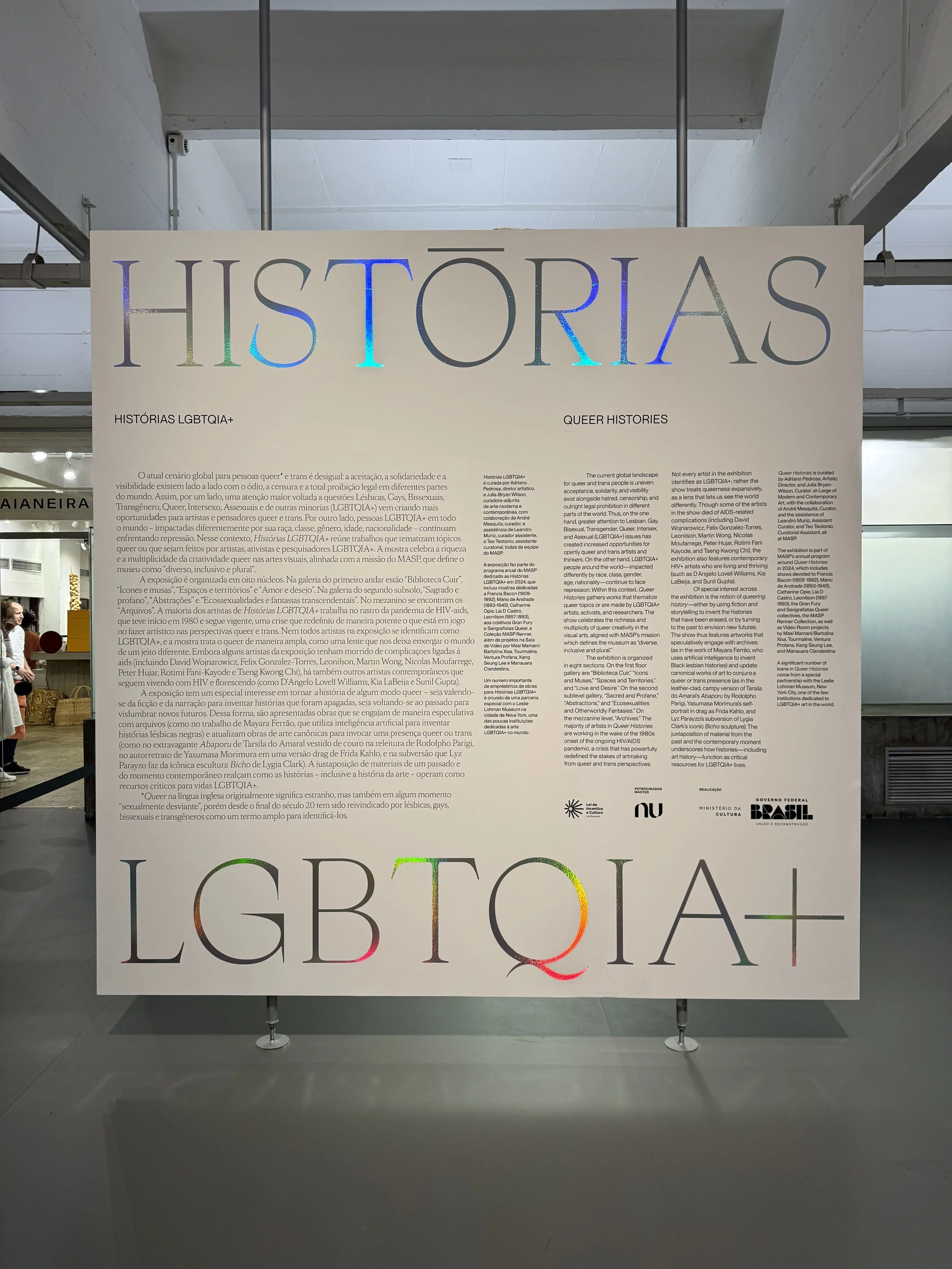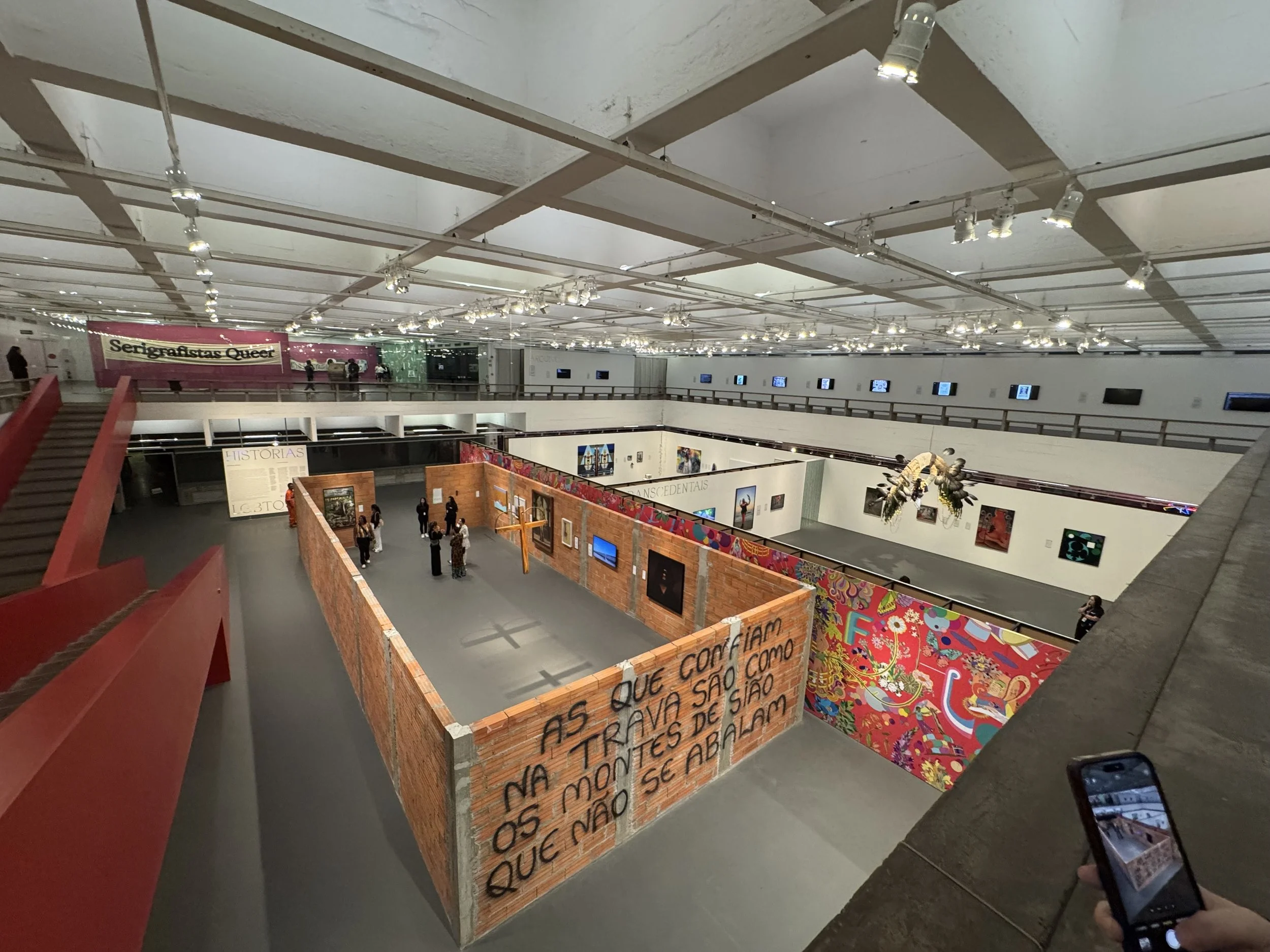
The current global landscape for queer* and trans people is unequal: acceptance, solidarity, and visibility exist alongside hatred, censorship, and outright legal prohibition in different parts of the world. Thus, on the one hand, increased attention to Lesbian, Gay, Bisexual, Transgender, Queer, Intersex, Asexual, and other minority (LGBTQIA+) issues is creating more opportunities for queer and trans artists and thinkers. On the other hand, LGBTQIA+ people worldwide – impacted differently by their race, class, gender, age, and nationality – continue to face repression. In this context, LGBTQIA+ Stories brings together works that address queer topics or that are created by LGBTQIA+ artists, activists, and researchers. The exhibition celebrates the richness and multiplicity of queer creativity in the visual arts, aligned with MASP's mission, which defines the museum as "diverse, inclusive, and plural."
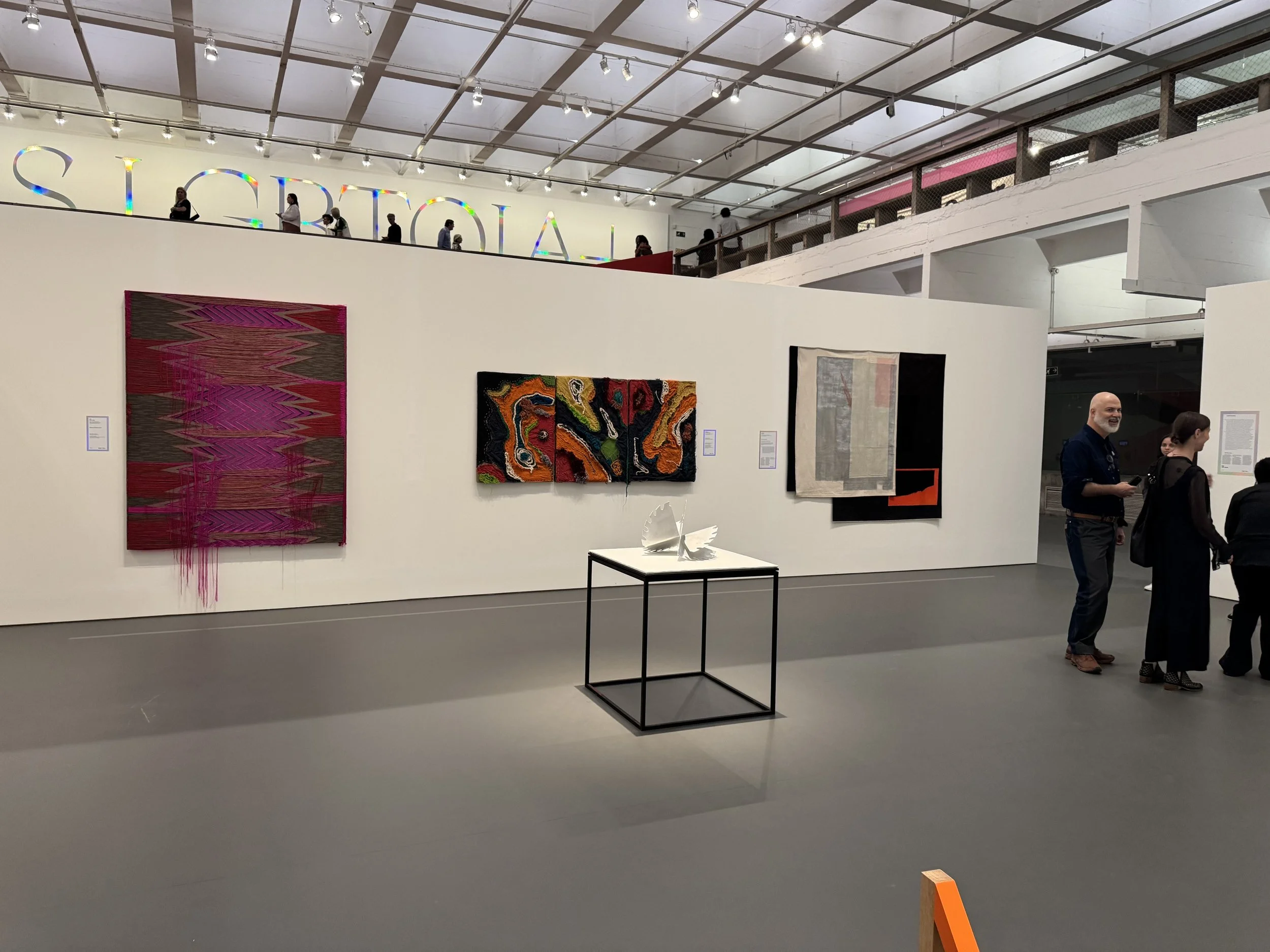
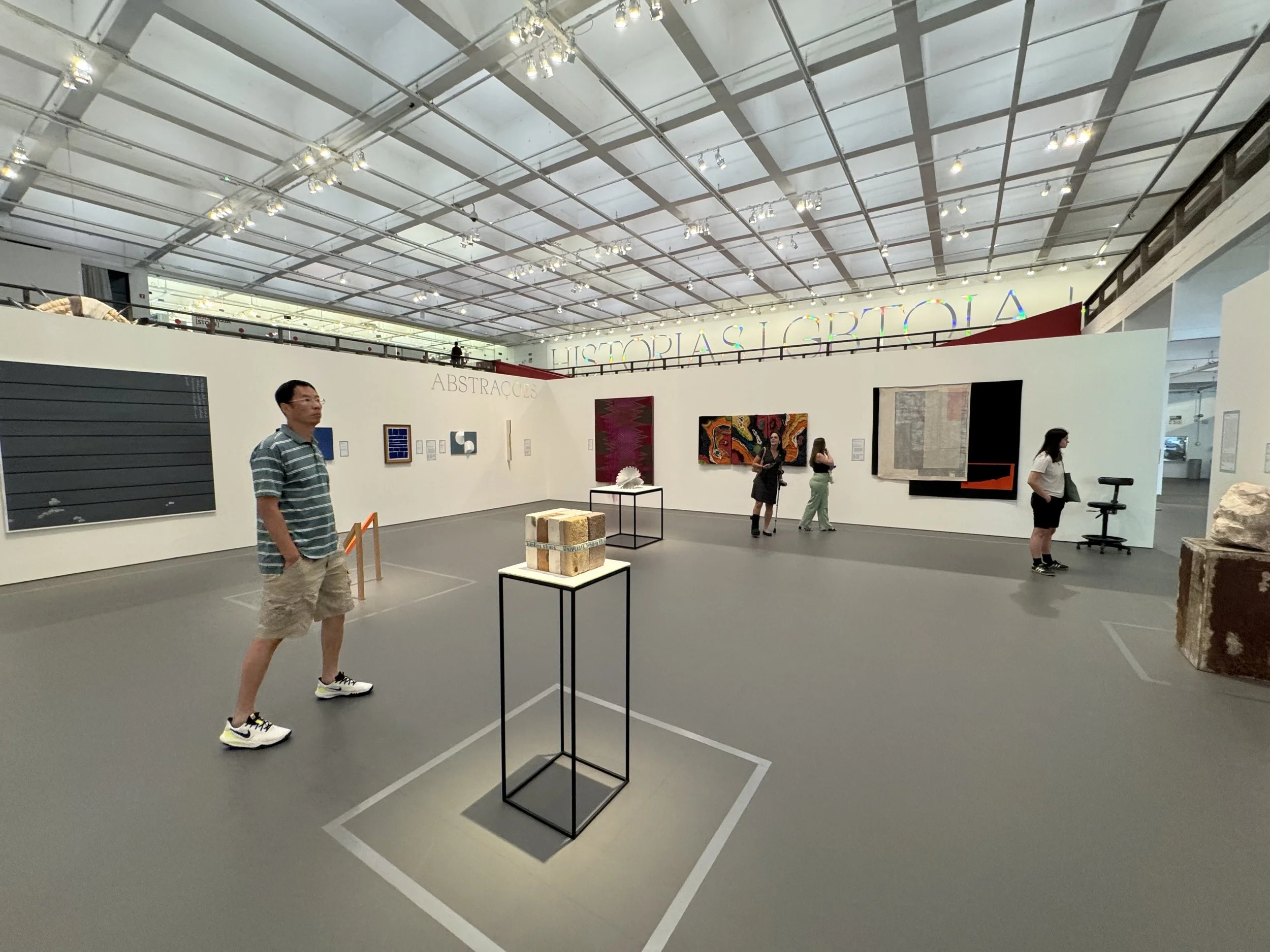
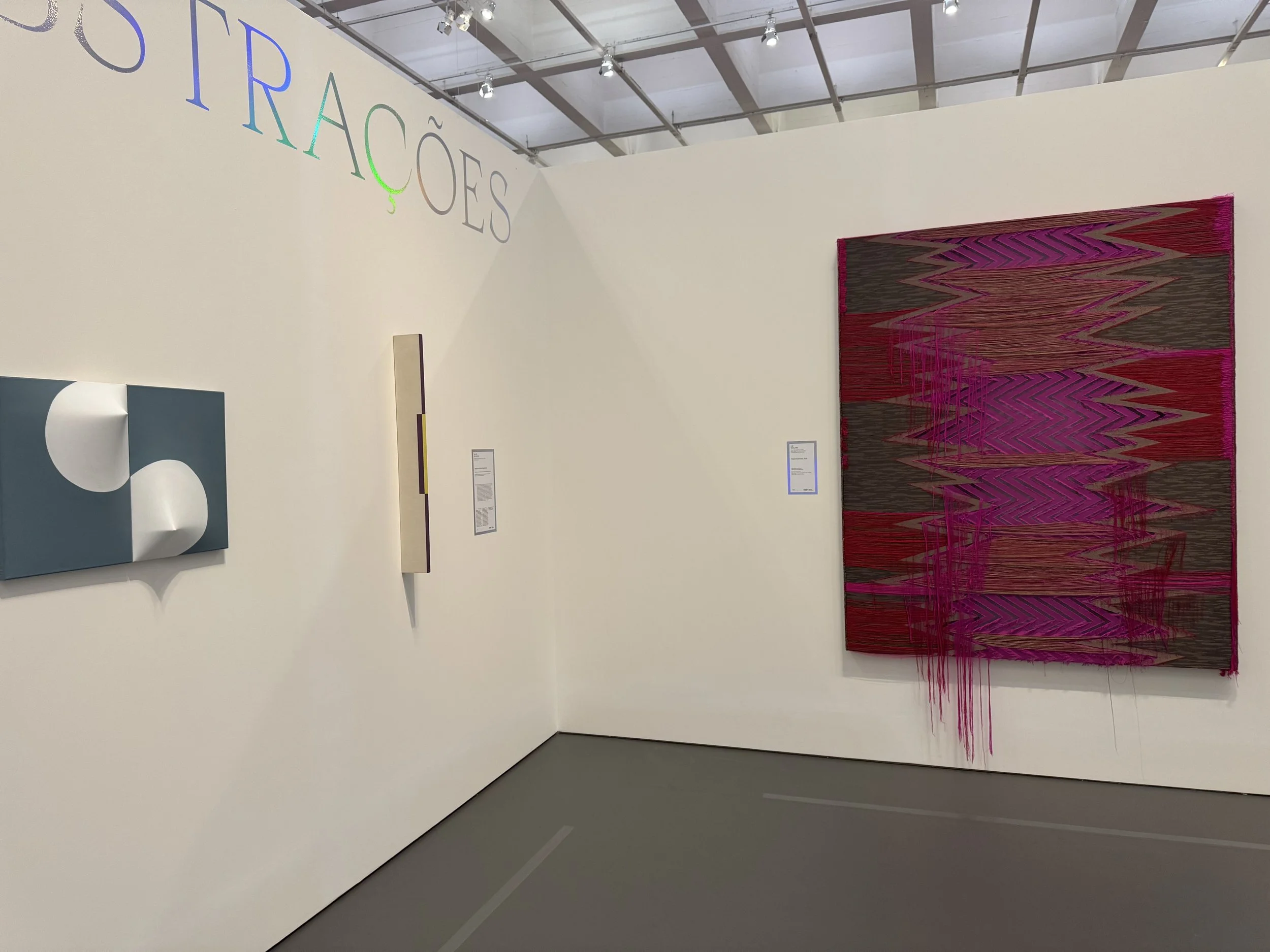
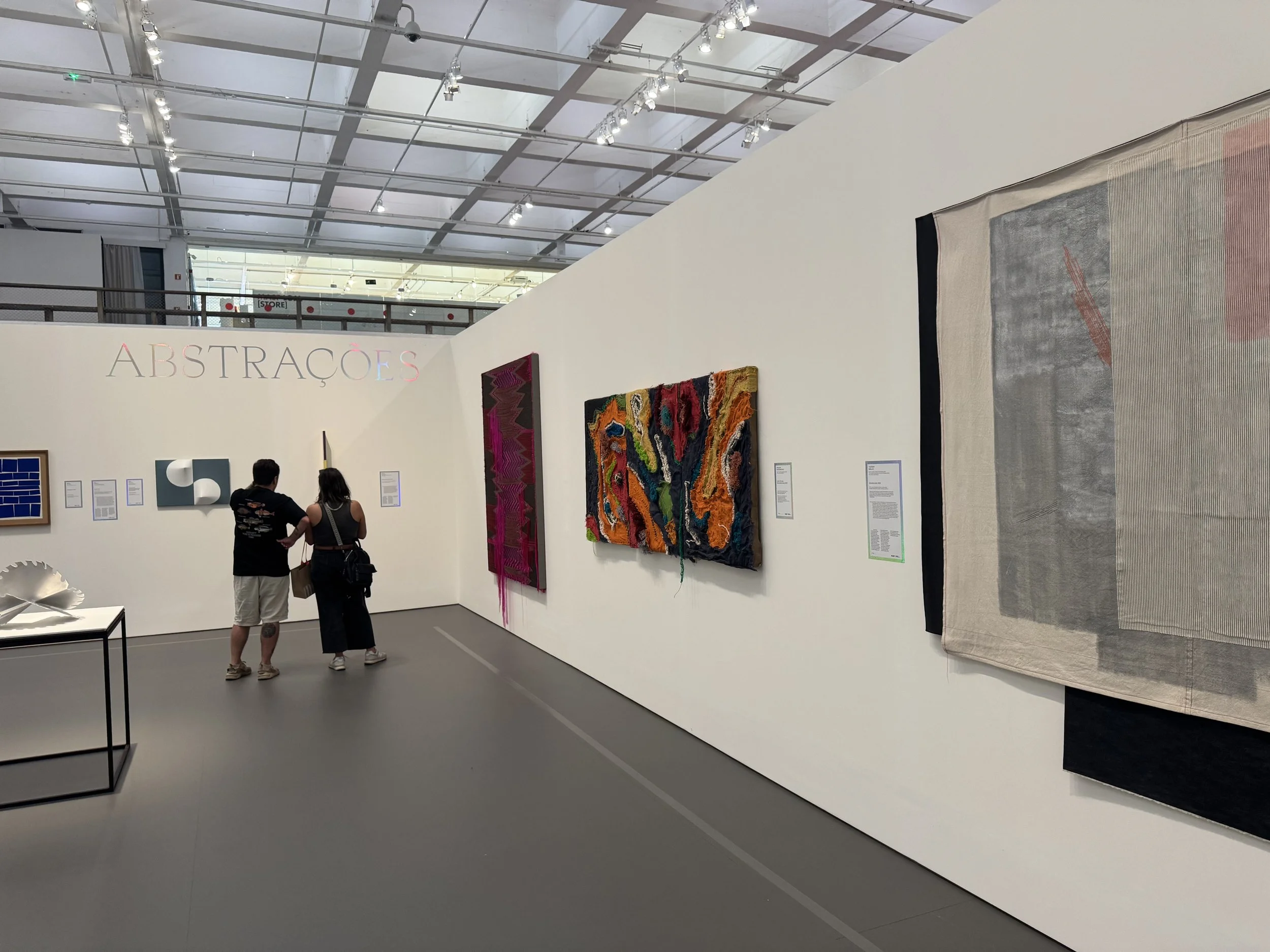
The exhibition is organized into eight sections. On the first floor gallery are “Cuir Library”, “Icons and Muses”, “Spaces and Territories”, and “Love and Desire”. On the second basement level gallery are “Sacred and Profane”, “Abstractions”, and “Ecosexualities and Transcendental Fantasies”. The “Archives” are located on the mezzanine. Most of the LGBTQIA+ Histories artists work in the wake of the HIV/AIDS pandemic, which began in 1980 and continues to this day, a crisis that has powerfully redefined what is at stake in artistic practice from queer and trans perspectives. Not all artists in the exhibition identify as LGBTQIA+, and the show treats queer in a broad way, as a lens that allows us to see the world differently. Although some artists in the exhibition have died from AIDS-related complications (including David Wojnarowicz, Felix Gonzalez-Torres, Leonilson, Martin Wong, Nicolas Moufarrege, Peter Hujar, Rotimi Fani-Kayode, and Tseng Kwong Chi), there are also other contemporary artists who continue to live with HIV and thrive (such as D'Angelo Lovell Williams, Kia LaBeija, and Sunil Gupta).
The exhibition has a special interest in making history somehow queer – whether by using fiction and narration to invent stories that have been erased, or by looking to the past to glimpse new futures. In this way, works are presented that engage speculatively with archives (such as in the work of Mayara Ferrão, who uses artificial intelligence to invent Black lesbian stories) and update canonical works of art to invoke a queer or trans presence (such as in Tarsila do Amaral's extravagant Abaporu dressed in leather in Rodolpho Parigi's reinterpretation, in Yasumasa Morimura's self-portrait in a drag version of Frida Kahlo, and in Lyz Parayzo's subversion of Lygia Clark's iconic sculpture Bicho). The juxtaposition of materials from the past and the contemporary moment highlights how stories – including art history – operate as critical resources for LGBTQIA+ lives.
*Queer in the English language originally means strange, but also at some point "sexually deviant," however since the end of the 20th century it has been reclaimed by lesbians, gays, bisexuals and transgender people as a broad term to identify them.
LGBTQIA+ Stories is curated by Adriano Pedrosa, artistic director, and Julia-Bryan Wilson, adjunct curator of modern and contemporary art, with collaboration from André Mesquita, curator, and assistance from Leandro Muniz, assistant curator, and Teo Teotonio, curatorial assistant, all from the MASP team.